Which Vending Machine To Start With?
So you've decided you want to get into the vending business. Smart move — the concept is solid. You find a good location, place a machine, and collect revenue without clocking in anywhere. The problem most beginners run into isn't the idea, it's the starting point. There are more types of vending machines than most people realize, and picking the wrong one for your situation can set you back months before you even get going.
Here's an honest breakdown of the most common options for beginners, and what you should actually know before putting money down.
Traditional Snack & Drink Machines
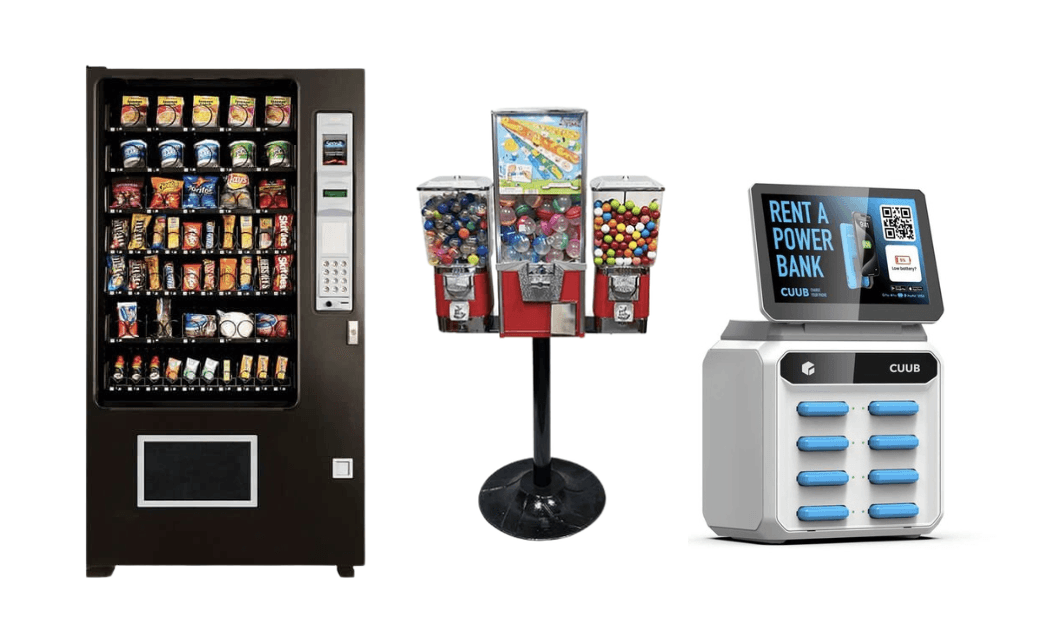
This is what most people picture when they think vending. A big machine stocked with chips, candy, and sodas sitting in an office break room or school hallway.
The upside is that demand is proven and locations are everywhere. The downside is everything else. A decent new machine runs $3,000–$5,000, and used ones start around $1,500 but come with reliability risk — you don't know what you're inheriting. Margins sit around 35%, and you're on the hook for restocking, product management, and repairs. Drinks are heavy. Chocolate melts. And if you're not checking in regularly, a broken machine at your best location can cost you the placement entirely.
Best for: Someone with $3,000–$5,000 to invest, a reliable vehicle, and time to manage weekly restocking runs.
Bulk Vending Machines (Gumballs / Candy)
These are the small standalone dispensers you see near restaurant exits — the ones that take quarters for a handful of M&Ms or a bouncy ball. They're cheap to start ($100–$200 per machine) and require almost no maintenance.
The catch is the revenue is just as small. Most bulk machines generate $5–$20/month per location. You'd need dozens of well-placed machines to make any real income, and finding and managing that many locations becomes its own full-time job. It's a volume game that doesn't scale well for most people.
Best for: Someone who wants to learn the basics of the vending business with minimal risk before committing real capital.
Specialty Machines (Electronics, PPE, Beauty Products)
These machines vend higher-ticket items — phone accessories, headphones, sunscreen, makeup, or even over-the-counter medicine. You'll find them in airports, hotels, and gyms.
The margins can be strong and the niche is less competitive. But the machine costs are higher, the product sourcing is more complex, and the location requirements are very specific. A PPE machine that crushes it in an airport might completely flop in an office building. Getting the product-location fit right takes more experience than most beginners have.
Best for: Someone with industry connections or location access in high-traffic travel or hospitality venues.
Smart Coolers
Smart coolers are the newer generation of refrigerated machines — think a glass-front cooler with cashless payment and remote monitoring built in. They allow more flexibility in product mix and can carry higher-priced items than traditional machines.
ROI can be faster than traditional vending (some operators see returns in 4–8 months), but the upfront cost is significantly higher and the technology adds a layer of complexity. One operator in our research never reached profitability because the machine cost made it nearly impossible to break even in a limited-hours location.
Best for: An experienced operator ready to expand, not a first-timer.
CUUB Power Bank Sharing Stations
This is where we're obviously biased — but hear us out, because the numbers speak for themselves.
A CUUB phone charging kiosk costs $500. There's no product to restock, no inventory to manage, and no repairs for you to handle — we take care of all of that. You place the station in a high-traffic Chicago location, and it generates passive income from every portable charger rental. Margins are 70%, more than double what you'd see with a traditional snack machine.
The power bank rental market is still wide open in most venues across Chicago, which means you're not fighting for placements the way vending operators are. The stations are compact and easy to relocate if a spot underperforms. And because CUUB is Chicago-built and community-driven, we actually help you close your first locations — you're not figuring it out alone.
Is the monthly revenue per station lower than a traditional vending machine? Yes. But so is everything else — the cost to start, the time to manage, and the risk if something goes wrong. For someone who wants to grow their route without growing their workload, CUUB is the closest thing to true passive income in this space. Anyone in Chicago who's ever had to run around trying to rent a phone charger knows the demand is real — and now you can be on the earning side of it.
Best for: Anyone looking for a low-barrier, maintenance-free passive income stream in Chicago — whether you're brand new to the game or a vending operator looking to add lower cost, higher margins to your existing route.
The Bottom Line
There's no universally "best" vending machine for beginners. The right choice depends on your budget, your time, and your tolerance for operational work. But if you're starting from zero and want something that actually runs itself, the math on a CUUB station is hard to argue with.
The vending industry has been telling people for years that passive income is possible. CUUB is the version that actually delivers on that promise.

